Blog

Potion of Fierabrás (*)

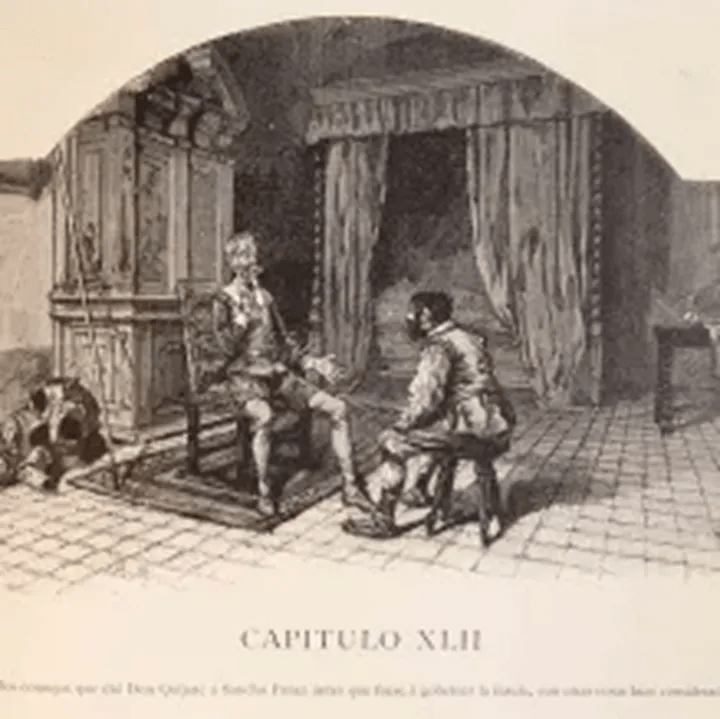
“What flask and what Potion are this,” said Sancho Panza. It is a balm, replied Don Quixote, of whom I have the recipe in my memory, with which there is no fear of illness, nor can I fear death.” (^)

Humans have been searching for the remedy for all our ills for centuries. Observe the quote from the famous and immortal story of the Ingenious Hidalgo Don Quixote de la Mancha, written in 1647. When reading the story, we laugh at the follies of Don Quixote and the naivety of Sancho. However, we are already in the first quarter of the Twenty-first Century, almost four hundred years after Cervantes wrote Don Quixote. We are still looking for the Potion of Fierabrás, the magic pill to cure everything. We will not say that we will not find it, but I think we can recommend that you do not wait for it standing up because you will get tired. Now, the potion of Fierabrás is one more chimera. However, we have other tools to improve our cognitive functions.

One of them is learning to discern. Webster’s New Dictionary [1] defines the term as to perceive as separate as distinct. Look, perceiving is like putting together a puzzle. We must pick the right pieces and put them together. However, the task will be easy if they have a photo or an engraving of what we want to put together. Even more, the task becomes a challenge when discussing the human brain. Stay calm about this. There is help.

In this article, we will only discuss one topic masterfully expressed in the book “The SharpBrains Guide to Brain Fitness “by Alvaro Fernandez, Elkhonon Goldberg, and Pascale Michelon. Cognitive biases.

Our minds have unique characteristics that influence our decision-making, called cognitive biases. Our intellect has individual factors that influence our decision-making, called cognitive biases. Cognitive biases are the inclination to make decisions based on the peculiarities of our minds. Cognitive biases can be defined as the inclination to make decisions based on the peculiarities of our minds.

Sure enough, our brain is peculiar. Without the slightest doubt, it is the most developed of all species. It weighs about 7 pounds, which is only 2% of body weight, but consumes 20% of the energy of the rest of the body. He can forge languages, read, write, create art, invent science, compose music, perform, think the unthinkable, ponder philosophy, remember the past, document history, feel emotions, etc. However, it is an imperfect organ in development trying to adapt to an environment that changes at a speed that makes it dizzy. Within the range of its limitations is that of cognitive biases. We will talk about two of them:

Exposure effect: “This is the tendency for us to like things simply because they are familiar. For example, since we have heard for decades that puzzles or blueberries are crucial for promoting brain health, we convince ourselves that they are. Perhaps this can be explained by the fact that processing familiar things requires less effort.” [2]

Closeness bias: “This is the tendency to overvalue and remember the most recent information more vividly. For example, reading the latest news story today may lead you to give it more credit than another one you read last week, even though it is of poorer quality. Imagine the continued impact of this bias given the barrage of daily news.” [4]

Humans are always in a self-dialogue; other human beings and entities constantly visit us through computer networks such as phones, computers, and tablets. But for there to be dialogue, both parties need to manage their ideas and both parties to suspend passing judgment or judging for the duration of the exchange of ideas or information. The reader has undoubtedly already understood that we cannot discern if we do not consider our cognitive biases. However, if we are unaware of our cognitive biases, we fall into the error of believing only we are right. That’s why we started this dialogue talking about discernment.

The following article will discuss one of the most important tools to change our brains to adapt to new realities. I am talking about computerized brain training programs — specifically BrainHQ.

Until the following article. All the best to you and your family. Thank you.

(*) Fierabras (from French: fier à bras, “brave/formidable arm”) or Ferumbras is a fictional Saracen knight (sometimes of gigantic stature) appearing in several chansons de geste and other material relating to the Matter of France.

(^) Part Two Chapter X. First and Second Part of the Ingenious Hidalgo Don Quixote de Mancha Composed by Miguel de Cervantes Saavedra. National Academy of the History of Venezuela. Facsimile edition of the original of the year 1647. Talleres de Italográfica S.A. 1992 Caracas, Venezuela.

[1] Webster’s New Riverside Dictionary. Berkley Books New York

(2) The SharpBrains Guide to Brain Fitness “by Alvaro Fernandez, Elkhonon Goldberg, and Pascale Michelon.

[3] The SharpBrains Guide to Brain Fitness “by Alvaro Fernandez, Elkhonon Goldberg, and Pascale Michelon. 2013 SharpBrains Inc.


[4] The SharpBrains Guide to Brain Fitness “by Alvaro Fernandez, Elkhonon Goldberg, and Pascale Michelon. 2013 SharpBrains Inc.
BRAIN TRAINING 101. THE GOOD MORNING TEST

I go fast walking early in the morning every other day in a park near my home. Whenever I encounter a person, I say: “Good morning.” It is a form of acknowledgment and a good wish. What fascinates me is the kind of responses I get. They range from: “Good morning (smiling friendly), good morning (surprise), good morning (surprise and then warm smile), a grunt, and silence.

Now let’s look at this from another angle. Visualize walking into a room full of people and saying hello with a friendly smile. What would you feel if nobody acknowledged you? Most of us will feel rejected and, depending on our stage of mind, even furious. On the other hand, if only one person smiles and acknowledges your greeting, you feel good. All those feelings and emotions are happening in your brain, and you become conscious. We are a social species. We want to be recognized in a particular way. So, it is with our brain. When you say hello to your brain, you feel good. Nevertheless, you feel rejected if you ignore your brain. You might be thinking now, what does this have to do with brain training and the excellent morning test? The answer is a lot. Because brain training is a way to say hello to your brain to recognize your brain, by doing so, you will be able to say good morning with a smile and feel good about yourself. I know, I know, the question is how?

A good brain training program will do the trick. For example, the one I use in my practice as a braining trainer is BrainHQ from Posit Science. The brain exercises in this program go to the root of our brain abilities, i.e., attention, brain speed, memory, people skills, intelligence, and navigation. Look at the above picture. I want you to imagine that each door is the entrance to the six brain abilities I mentioned. So, the first door will be the door of attention; the second one will be the door of brain speed; the third will be the door of memory, and so on. You try to open the door of attention it does not open. It is jammed because this door has been closed for a long time. The hinges are all rusted. The exercises I mentioned before act as lubricants for the hinges of this door and all other doors. If you train regularly with BrainHQ, you will lubricate the hinges of all these six doors and then be able to say good morning with a smile. Better still, your brain will be healthy and happy.

Note: If you want to dig deeper into these concepts, I recommend you read Soft-Wired by Dr. Michael Merzenich

NEUROPLASTICITY. AN INTRIGUING CASE OF CAUSE AND EFFECT

Let’s begin by saying that neuroplasticity is the brain’s ability to reorganize itself throughout life. As you remember in my previous article, Cognition. Oh, could you repeat that, please? https://medium.com/@saccharo, I argued that our ability to process and respond to our circumstances diminishes with time. Consequently, the capability of our brain to rearrange throughout life is affected. The cause of shrinking cognition brings about the effect of the arrest of positive neuroplasticity.

There are 100 million neurons (nerve cells) in our brains. These neurons (chemical synapses) talk to each other through electrochemical reactions. Chemical synapses never touch. It is a chain reaction. The cause of specific electrochemical changes in one neuron produces the same changes in another, and so on. Let us see how one of the geniuses of 500 years ago intuited this process and its consequences.

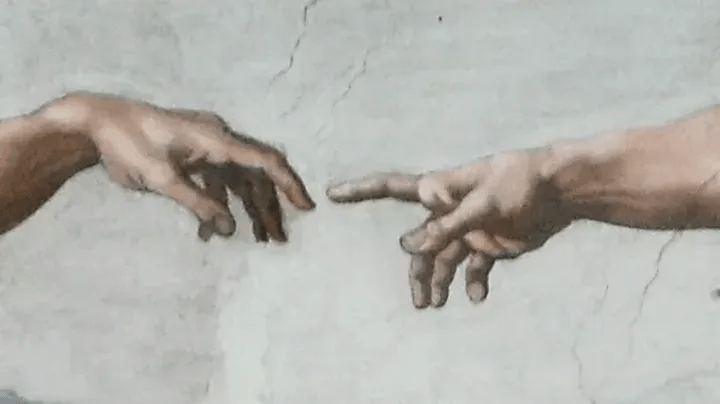
Michelangelo di Lodovico Buonarroti was the most famous artist of his time. A superstar of the High Renaissance period. He told his assistants, “A man paints with his brain and not his hands.” Today most everybody will understand that assertion, but more than 500 years ago, that affirmation would have sounded at least odd. Michelangelo painted with his hands, but he knew the role his brain played. To grasp the depth of his intuition, please look at the picture above. This famous image is from The Creation of Adam in the ceiling of the Sistine Chapel at the Vatican. Observe how the index finger of God points at Adam’s index finger but does not touch it. And by doing so, he gives him life. Michelangelo portrayed in this fresco the conception of life from God to man in the same way neurons pass information to other neurons. For many, this declaration might be a mere flight of fancy. Or could it be an intuition of the genius of how the brain works? Another relation of cause and effect?

Dr. Alvaro Pascual-Leone, Professor of Neurology at Harvard Medical School, tells us that; “The world changes very fast, too fast for the genes to be able to modify our brain and make us able to cope with these changes. So, nature invented plasticity, the brain’s capacity to be modified to cope with the changes in the world…Plasticity changes the nature of synapses (connections between neurons) and the number of synapses in the brain. These changes can occur following any activity of the brain.” [1]

It is estimated that our species has been around for about 200,000 years. In the beginning, the world of information moved very slowly, but today is impossible to cope with. We either deal with it or perish. Fortunately, our brain has the property of neuroplasticity. Next time we will talk about how to take advantage of it properly.

Note: If you want to dig deeper into these concepts, I recommend reading Soft-Wired by Dr. Michael Merzenich and The Sharp Brain Guide to Brain Fitness by Alvaro Fernandez, Dr. Elkhonon Goldberg, and Dr. Pascale Michelon.

[1] The SharpBrains Guide to Brain Fitness. 2013. Fernandez, Goldberg, and Michelon p. 60.

File: The Creation Michelangelo Italy Vatican-Creative commons by gnuckx (3492637506).jpg From Wikimedia Commons, the free media repository

COGNITION. OH, COULD YOU REPEAT THAT, PLEASE?

“The future is like the past. But there’s a crucial difference. The past is fixed, but the future could be better.” Dr. Jordan Peterson

If somebody tells you something essential, can you precisely remember it 3 minutes later?

Maybe you will. Let me tell you something that happened to me some time ago. I had a small consulting firm in accounting, finance, and economics. One day I received a visit from my wife’s family member. One of her uncles. He was a successful entrepreneur with investments in agricultural products and sugar mills in several Latin American countries. A self-made man in his late sixties. His knowledge of English was minimal, and because of that, he wanted me to help him with specific business deals that he had in the USA. In order words, he wanted me to be his interpreter. I told him that I did not know anything about his business. He told me it would not be a problem if I followed his instructions to the letter. And then he added: “I would not tolerate mistakes or misunderstanding.” He would call me a week before every trip and give me specific instructions about the trip and all the details about the business deals in question. He told me: “I know you are in your thirties, and you think you know everything and don’t forget anything. But trust me, buy a cassette recorder, and tape our phone conversations. Then write a memo and send me a copy. Because if you goof, I’ll fire you on the spot.” Frankly, I said to myself, this man is a raving maniac. But the money was perfect. So, I accepted.

I bought the recorder, connected it to the phone, and waited patiently for the phone call. He called as he had promised one week before our first trip. The conversation lasted for more than one hour. We said goodbye. After rewinding the recorder, I began listening to our conversation. I wasn’t ready for what happened next.

The first thing I noticed was that I could recognize his voice, but when it came to my time to reply or ask questions, I could not recognize my voice even though I knew it was mine. Then the next surprise. There were entire paragraphs that I could not remember at all.

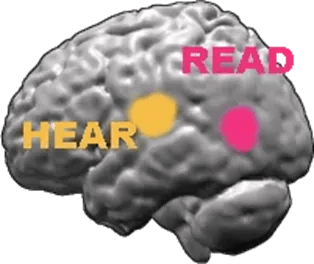
The above true story illustrates what cognition is all about. You see, we understand the world through our senses. In the above example, I heard my uncle’s instructions, but obviously, I did not remember or process the entire gamut of ideas. It’s a relationship between what our senses inform us and how fast our brain can process it. That ability of our brain is called cognition. But alas, that skill deteriorates with time.

Note: If this article has tickled your fancy, I recommend reading The Sharp Brain Guide to Brain Fitness by Alvaro Fernandez, Dr. Elkhonon Goldberg, Dr. Pascale Michelon, and Soft-Wired by Dr. Michael Merzenich.

File: HearReadBrain.from Wikimedia Commons, the free media repository

The Surprising Mental Toll of COVID

Published in BrainHQ Brain Fitness News: November 2020. This article was initially published under “The Mental Toll of COVID-19” in Scientific American 323, 6, 25 (December 2020) doi: 10.1038/scientificamerican1220

The rise in depression and anxiety is even worse than expected, especially among young adults.By Claudia Wallis | December 2020 issue of Scientific American

It didn’t take a crystal ball to predict that the COVID-19 pandemic would devastate mental health. Illness or fear of disease, social isolation, economic insecurity, disruption of routine, and loss of loved ones are known risk factors for depression and anxiety. Now studies have confirmed the predictions. But psychologists say the findings also include surprises about the vast extent of mental anguish, how media consumption exacerbates it, and how much it has affected young people.

For example, a report from the U.S. Centers for Disease Control and Prevention, released in August, found that anxiety symptoms tripled and depression quadrupled among 5,470 adults surveyed compared to a 2019 sample. Similarly, two nationally representative surveys conducted in April, one by researchers at Boston University School of Public Health and another by Johns Hopkins University, found that the prevalence of depressive symptoms (BU) and “severe psychological distress” (Hopkins) was triple the level measured in 2018. “These rates were higher than what we have seen after other large-scale traumas such as September 11, Hurricane Katrina, and the Hong Kong riots,” says Catherine Ettman, lead author of the BU study.

Some of the most affected groups in these studies were people with pre-existing mental health issues, low-income people, people of color, and people close to someone who suffered or died from COVID-19. However, in Ettman’s study, the group in the United States with the most significant increase in depression, which increased fivefold, was Asian. In an accompanying commentary, psychiatrist Ruth Shim suggested that the growth could reflect the impact of racism and insults related to the origin of the pandemic in China.

One unexpected finding in all three surveys was the enormous toll on young adults. In the CDC survey, 62.9 percent of 18- to 24-year-olds reported having an anxiety or depressive disorder, a quarter said they used more drugs and alcohol to cope with pandemic-related stress, and a quarter said they had “seriously considered suicide” in the previous 30 days. In an unusual real-time study, young adults were also the most affected age group that tracked the rapid rise in “acute distress” and depression by three points between mid-March and mid-April. “We expected the opposite because it was already clear that older people were at higher risk” of the virus, says lead author Roxane Cohen Silver, a psychologist at the University of California, Irvine.

Silver suspects that young people “may have had more disruptions to life events: graduations, weddings, senior year of college and high school. All those transitions and school and social connections were disrupted, which we know are very important for young people.”

Their study, which involved 6,500 people, points to a significant factor contributing to anxiety for people of all ages: increased engagement with media coverage of the outbreak. But that angst seems to take them more to the media. Especially problematic is exposure to contradictory information. Silver, who has studied the psychological consequences of events such as Sept. 11 and the 2013 Boston Marathon bombing, says fixation on media coverage is a known risk factor: “If people engage with many media, they’re more likely to expose and report distress. It’s a cyclical pattern that it’s hard to get out of yourself.”

Silver and others who research mass trauma have suggestions for maintaining mental balance in difficult times. One is limiting media consumption (TV, internet) and avoiding sensational reporting. Maintaining social contacts — via Zoom, phone, or other COVID-safe methods — is also vital, says psychologist James Pennebaker of the University of Texas at Austin. “Unlike any other disaster I’ve studied, people are actively less close to friends and community,” says Pennebaker, who is examining the pandemic’s impact on mental health by analyzing posts on the social media platform Reddit.

Fewer hugs and less shared grief may help explain why people don’t seem to adjust to the new normal, Pennebaker says. “This is not Sept. 11 or an earthquake, where something big happens, and we’re all back to normal pretty quickly.” Her other tips are maintaining healthy sleep habits, exercise, food, and drink habits. Keep a journal. Research shows that expressive writing helps people process difficult emotions and find meaning; she says, “If you worry too much about COVID, try writing about it.”

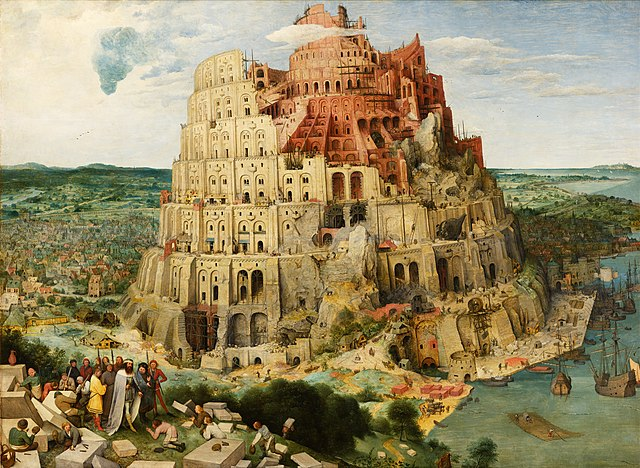
https://commons.wikimedia.org/wiki/File_talk:Pieter_Bruegel_the_Elder_-The_Tower_of_Babel(Vienna)-_Google_Art_Project-_edited.jpg#:~:text=File%20talk%3A,free%20media%20repository

Whenever something unfortunate occurs, it’s common for us to ponder the reason behind it.

Whenever something unfortunate occurs, it’s common for us to ponder the reason behind it. Well, that is not why it is all about life tracking.

This article reflects my almost 89 years of living on this planet. Errors, mistakes, failures, and accomplishments. An ordinary life!

I intend to give the reader some ideas about piloting the turbulent sea of life. The good news is that you can do it! The problem is how?

Steering the sea of life is like navigating in a sailboat in the ocean. Among many, you must learn the sailing technique of tacking. Tacking is a maneuver to change course by turning a boat’s head into and through the wind. It would be best to do that often since the wind changes frequently. It is a tricky maneuver to do! It requires much practice under an expert sailor; otherwise, you might sink.

Think about one thing that you cherish in your life. You worked very hard for it, and finally, you got it. Has it measured your expectations? Your reaction could be What a disappointment? Or I failed? Or lousy luck? I suggest instead doing Life-Tacking!

Life-Tacking uses the results of your actions or behavior to change course by turning you into and through life’s misfortunes. In other words, follow the advice of Irving Berlin’s song “Let’s Face the Music and Dance” (1). If you do so, you will understand what I mean. https://youtu.be/Yy4QPRbTBE8

This piece is all about facing the results of your actions. It is not how to fix the past because that is gone; it is not the future because that is not here now. It is about the present.

Credit. Schooner_J._Waterbury.jpg ‎(681 × 462 pixels, file size: 87 KB, MIME type: image/jpeg) File: Schooner J. Waterbury.jpg From Wikimedia Commons, the free media repository